Rajatsubhra
Chakraborty
Fourth-year Ph.D. student researching the intersection of interpretability, fairness, and bias in generative vision, advised by Dr. Depeng Xu & Dr. Cori Faklaris.
From mangas to comic books to detective novels, these things keep me glued all day long. A foodie and a Batman fanatic, I spend most of my leisure time reading about human evolution and anthropology. Right now I'm trying to understand how models form and visualize concepts, and how biases get encoded in those processes. If you love playing FIFA and talking about research and comic books, do drop by Woodward Hall 3rd Floor, RM 331.
Somewhere, something incredible is waiting to be known.– Carl Sagan
KDD Student Travel Award
Awarded a travel grant of up to $1,000 toward attending ACM SIGKDD 2026 in Jeju.
BiasMap Oral Slides Are Up
Slides from the Aug 13 talk — 11:00 AM, Room 202A, ICC Jeju. 🇰🇷 ↗
📄VLMs are Fragile Multilingual Associators
New preprint with Ritabrata Chakraborty et al. Read it on the project site. ↗
DM-QPMNet Accepted
Accepted to the IEEE International Conference on Image Processing. See you all in Tampere! 🇫🇮
I try to understand how generative vision models form and visualize concepts, and how social biases get encoded along the way. In text-to-image diffusion, demographic attributes like gender or race become entangled with ostensibly neutral concepts such as a profession, an object, or a setting, so that nudging one quietly drags the other along. I treat this concept entanglement as the real object of study, locating where it lives inside a model's cross-attention, measuring it spatially rather than only at the output, and asking how it forms over the course of generation.
From there the question becomes how to intervene without breaking the model. Instead of retraining on curated data, I look for lightweight, interpretable handles: steering the denoising trajectory, disentangling overlapping concepts, and using causal reasoning to separate what a model should attend to from the spurious correlations it has absorbed. The throughline across diffusion models, flow-based segmentation, and multilingual vision-language systems stays the same, which is to make a model's internal decisions legible and then make them fairer.
Building DM-QPMNet, a dual-modality fusion network for cell segmentation in quantitative phase microscopy. Developing physics-aware models that stay robust under low-visibility imaging conditions.
Proposed BiasMap, a model-agnostic pipeline that localizes and quantifies entanglement between demographic and semantic concepts in Stable Diffusion via cross-attention attribution. Designed energy-guided diffusion with a differentiable SoftIoU objective for plug-and-play bias mitigation without retraining.
Co-developed LLAVIDAL, a large language-vision model for activities of daily living, and curated the 100K-pair ADL-X dataset with 3D poses and object trajectories. Built a curriculum-based semi-supervised detector that lifted aerial object-detection mAP by 32% using only 20% ground images.
Engineered a U-Net model for cervical texture segmentation in ultrasound images, improving accuracy and clinical usability. Built an automatic multiclass segmentation pipeline that classified medical-imaging regions by tissue type.
Designed deep local descriptors using CNNs for instance-level recognition of historical architecture. Focused on robust feature matching for heritage-building and landmark recognition.
Developed transfer-learning models for handwritten character recognition, reaching 99.99% accuracy with a VGG16 backbone. Worked on Bangla and Devanagari script-recognition pipelines.
Designed an automatic text-detection pipeline for Indus Valley Civilization seals. Explored computer-vision approaches to localizing undeciphered scripts.
Selected publications. A full and current list lives on my Google Scholar. Entries marked ★ Selected are the ones I'd point you to first.
Teaching is one of the most rewarding parts of the job. A record of my TA and lead-TA roles below.
I received a KDD 2026 Student Travel Award — a travel grant of up to $1,000 toward attending ACM SIGKDD 2026 in Jeju.
Slides from my KDD 2026 oral on BiasMap are now online — view the oral presentation deck.
New preprint out: MaViSeg: Manifold Propagation and Visual Prototypes for Zero-Shot Open-Vocabulary Segmentation in Diffusion Transformers, with Xujun Che, Ritabrata Chakraborty, Xi Niu, and Dr. Depeng Xu. Now on arXiv, and the project website is live!
New preprint out: Vision-Language Models are Fragile Multilingual Associators (M²BIND), with Ritabrata Chakraborty, Shivakumara Palaiahnakote, Angelo Cangelosi, and Umapada Pal. Project site is live!
DM-QPMNet has been accepted to the IEEE International Conference on Image Processing (ICIP) 2026! See you all in Tampere, Finland! 🇫🇮
BiasMap has been selected for an Oral at ACM SIGKDD (KDD) 2026! I'll present on August 13, 2026, 11:00–11:20 AM in Room 202A, Jeju. The project website is live. See you in Jeju, South Korea! 🇰🇷
Yaay! I have passed my Qualifier Examination!
I gave a contributed talk in Room 213 of Music City Centre, Nashville, TN, at the DemoDiv CVPR workshop on June 11th at 11:45 AM.
BiasMap: Can Cross-Attention Uncover Hidden Social Biases? was accepted at the CVPR 2025 DemoDiv Workshop. It was my first collaborative work with Dr. Depeng Xu and Dr. Cori Faklaris.
TruthLens preprint is out now!
LLAVIDAL is accepted to CVPR 2025! See you soon, Nashville!
A short version of LLAVIDAL was accepted at the MAR and VLM workshops at NeurIPS 2024!
Paper released: LLAVIDAL: Benchmarking Large Language Vision Models for Daily Activities of Living. Have a look at the website.
MAVREC was accepted at CVPR 2024! See you soon, Seattle!
Service to the research community: reviewing, mentoring, and volunteering.
- Program Committee Member, PAKDD 2026
- Asian Conference on Machine Learning (ACML) 2026
- Annual Meeting of the Association for Computational Linguistics (ACL) 2026
- IEEE International Conference on Image Processing (ICIP) 2026
- Conference on Empirical Methods in Natural Language Processing (EMNLP) 2025
- ACM Conference on Information and Knowledge Management (CIKM) 2025
- ACL Student Research Workshop (ACL SRW) 2025
- ICML DIGBUGS Workshop, Program Committee Member 2025, Vancouver, BC
- IEEE Transactions on Multimedia 2025
- DemoDiv Workshop, CVPR 2025, Nashville, TN
- ReGen AI Workshop, CVPR 2025, Nashville, TN
- International Conference on Intelligent Systems for Molecular Biology (ISMB) 2024
- ACM SIGKDD Conference on Knowledge Discovery and Data Mining (KDD) 2026, Jeju, South Korea
- IEEE International Conference on Information Reuse and Integration (IRI) 2022
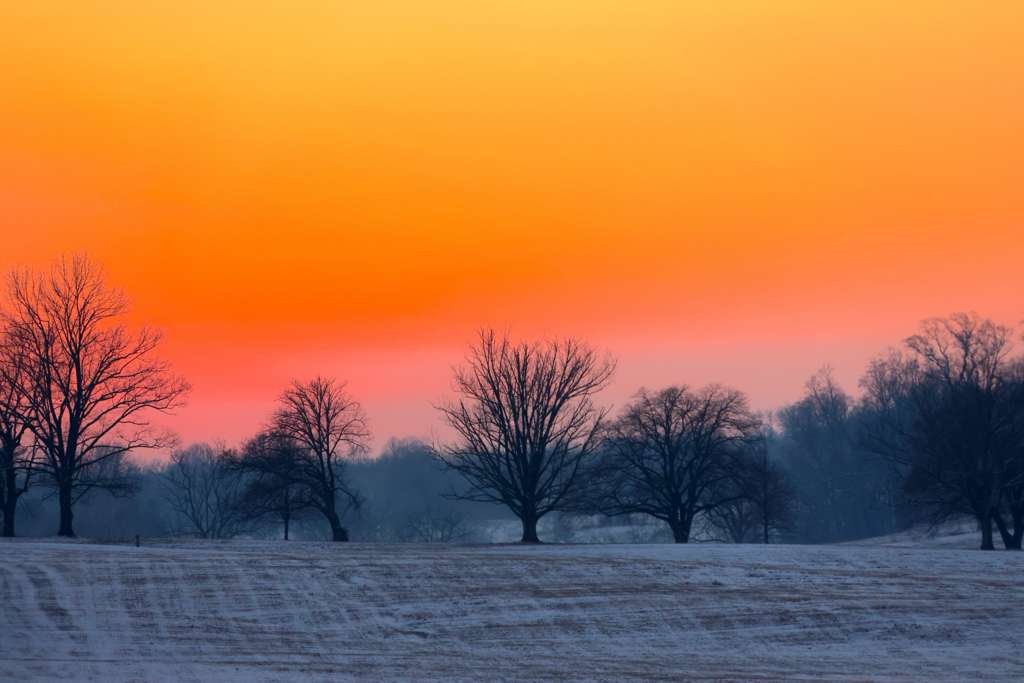
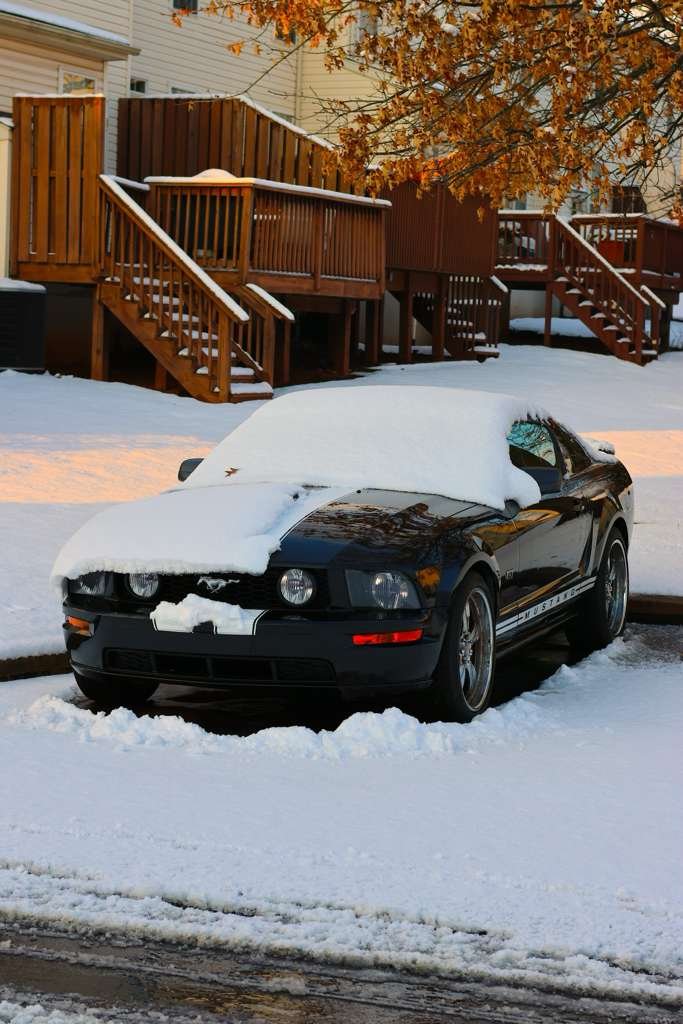
When I'm not chasing cross-attention maps, I'm chasing light on the street. A rotating set of frames across street, travel, and the in-between.